
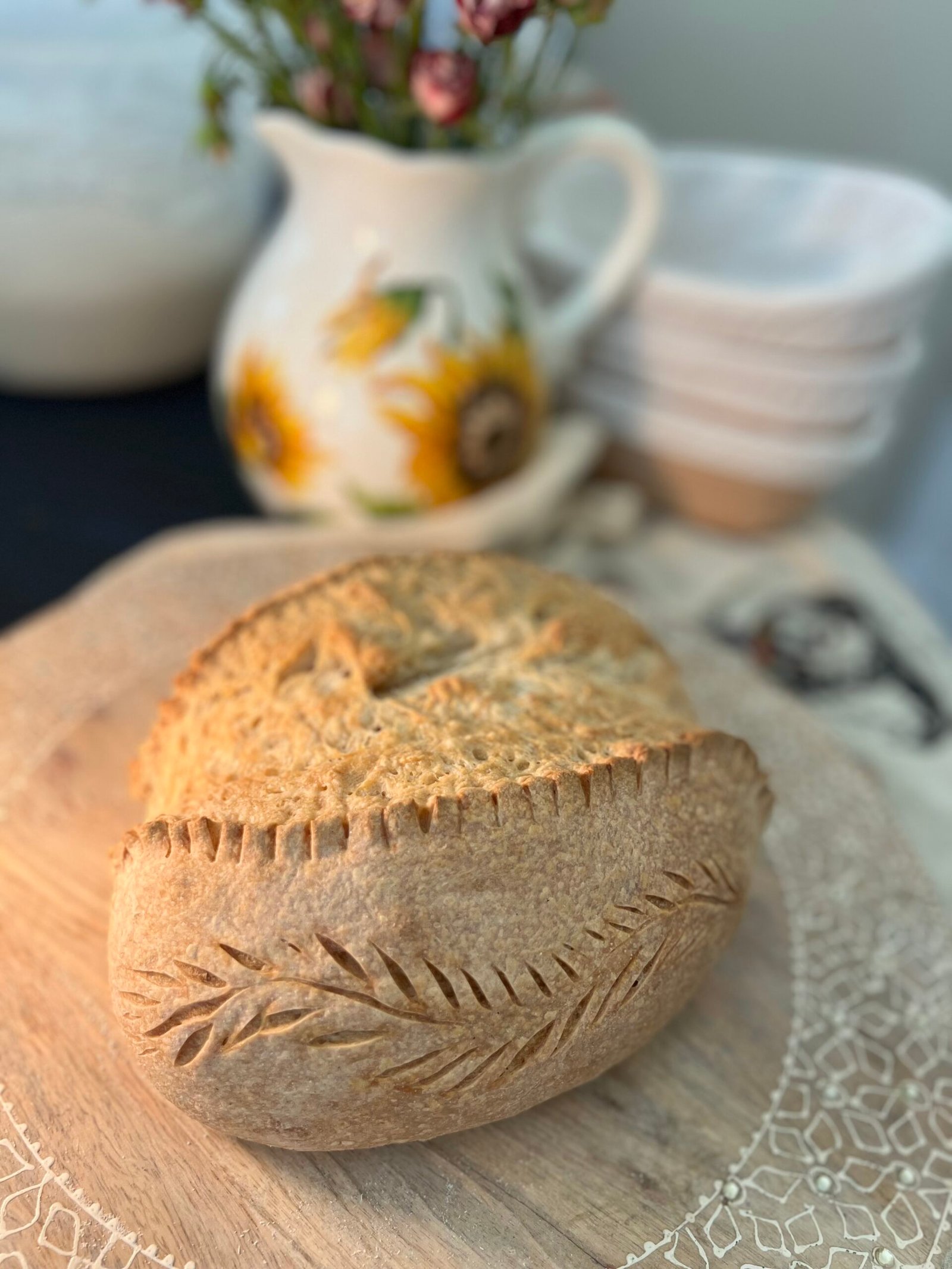
There is a particular kind of disappointment that comes from pulling a loaf out of the oven and finding it pale. Not burnt, not underbaked exactly — just flat, dull, and somehow smaller than it went in. The first time it happened to me I thought I had done everything right. Good starter, a bulk rise I was proud of, a shaping job that actually held. And then out came something that looked like a scone that had given up.
What I did not have was steam.
I want to talk about steam, because it is the step I see skipped most often by people starting out, and it is most of the difference between a loaf that looks like yours and a loaf that looks like the ones you have been staring at online.
WHAT STEAM IS ACTUALLY DOING IN THERE
When dough hits a hot oven, two things start racing each other. The inside is still expanding — all the gas built up over those long hours of fermentation is heating up and pushing outward. That is oven spring, and it is the last big thing that happens to your bread.
The outside, meanwhile, wants to set. Heat dries the surface, the crust hardens, and once it hardens it stops stretching.
If the crust sets before the inside has finished expanding, the loaf has nowhere left to go. It stays tight and small, and often it tears somewhere along the side where the pressure found a weak spot. That ugly blowout down the flank of a loaf is usually not a scoring problem. It is a steam problem.
Steam keeps the surface damp and flexible through the first stretch of the bake. The crust stays soft, the loaf keeps climbing, and your score opens the way it was meant to.
There is a second thing steam does, and it is the part that makes bread look like it came from a bakery. Moisture on the surface gelatinises the starches in the outer layer of dough. Dry that surface out later in the bake and those gelatinised starches turn glossy and brittle. That is where the sheen comes from, and the fine blistering, and the shattering crackle as it cools on the rack. Without steam you can still get a brown crust. You will not get that.
WHY A DUTCH OVEN WORKS
A Dutch oven is not adding steam. That surprises people. You are not pouring anything in and there is no water involved.
What it does is trap the water already in your dough. A loaf is roughly forty percent water by weight, and as it heats, that water starts leaving as vapour. In an open oven it simply drifts away. Under a heavy lid it has nowhere to go, so it hangs around the loaf in a dense, humid cloud of the dough’s own making.
That is why a Dutch oven is so forgiving. It is doing the work for you.
It is also why preheating matters more than people think. A cold pot spends the first stretch of the bake coming up to temperature, and during that time your loaf is sitting in a lukewarm box instead of getting the blast of heat it needs. Forty-five minutes at full temperature, with the pot inside the whole time. Not twenty.
IF YOU BAKE WITHOUT ONE
You absolutely can. You just have to supply what the pot would have trapped.
The method I use when I am baking more than one loaf at a time: a heavy metal tray on the shelf below, preheated along with everything else, and a cup of boiling water poured into it the moment the bread goes in. Boiling, not cold — cold water drops your oven temperature and takes time to turn to steam, and by then the window has closed.
Ice cubes work on the same principle and are easier to handle. A good handful onto a preheated tray, then shut the door fast.
Some people spritz the loaf and the oven walls with a spray bottle. It works a little, but water on hot glass makes me nervous and the effect does not last long.
What also works and costs nothing: invert a large metal or ceramic bowl over the loaf for the first twenty minutes. You have just made a Dutch oven out of something already in your cupboard.
Whatever you use, the enemy is the open door. Every time you open it for a look, the steam you built leaves in about two seconds. Set a timer and trust it.
THE PART PEOPLE FORGET: TAKING THE STEAM AWAY
Steam is only good for the first stretch. Roughly twenty minutes, which is about as long as oven spring lasts anyway.
After that you want the opposite. A dry oven, so the surface can finally set, brown and crisp. This is when colour develops, and when that gelatinised layer turns into crackle.
Leave the lid on for the whole bake, or keep the water tray in there the entire time, and you will get a loaf that is pale, soft-skinned and faintly leathery. Technically baked. Not what you were after.
So: lid on for twenty, lid off for the rest. Water in for twenty, then out. That two-stage bake is the whole trick.
WHAT I WOULD TELL MYSELF, STARTING OUT
Steam is not a refinement you graduate to once everything else is mastered. It is as structural as your fermentation. You can nail the starter, the bulk rise, the shaping and the score, and still lose all of it in the first ten minutes of the bake.
The good news is that it is the cheapest fix in the whole process. A lid, a tray, a bowl, a handful of ice. Nothing you need to go and buy.
Every loaf that leaves my kitchen is made with organic flour and a live sourdough starter, and the wild yeast does its slow work over a day or more. The bake is the last twenty percent — but it is the twenty percent everybody sees.
Give it steam.

Leave a Reply