
Prep about 3 hours · Bulk ferment 3–4 hours · Cold proof 12–18 hours · Bake 45 minutes · Cool 1 hour · Total about 20–26 hours · Makes 1 loaf
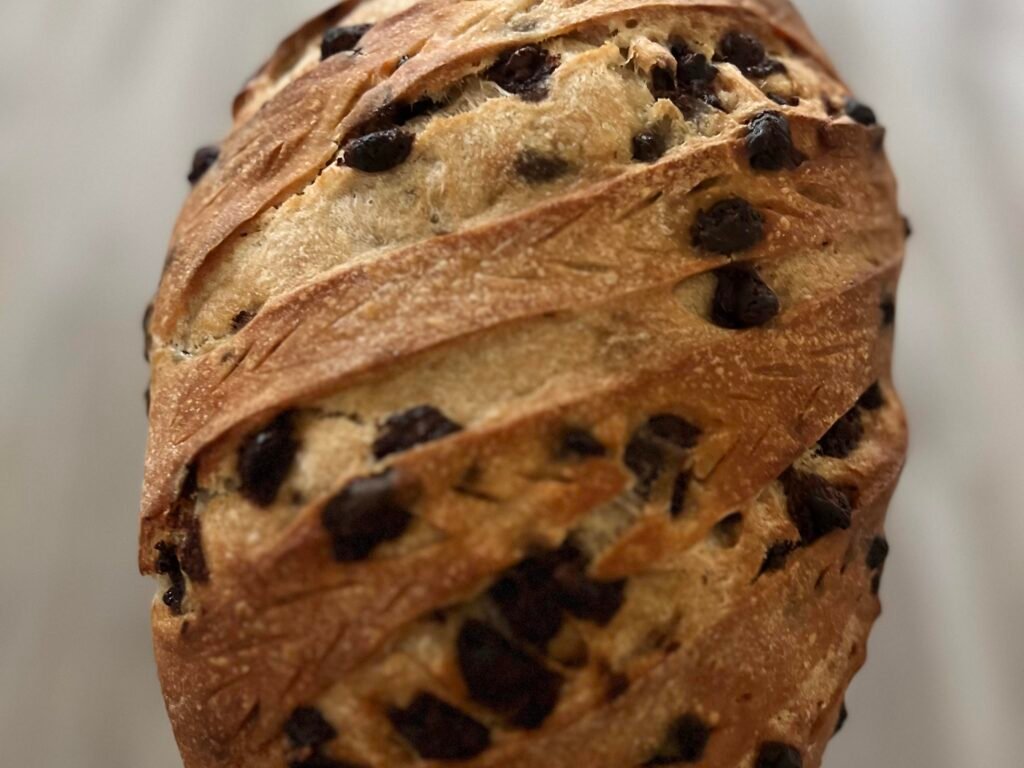
Sweet, tangy and studded with chocolate — this is the loaf that wins over anyone who thinks sourdough is strictly savoury. The crumb is soft and faintly sweet from a little sugar and vanilla, the crust still shatters the way a good sourdough crust should, and the chocolate goes in right at the end so it stays in clean pockets instead of smearing through the dough.
A SHORT HISTORY OF SOURDOUGH — AND ADD-INS
Sourdough is the oldest raised bread there is: flour, water and time, lifted by wild yeast and lactic acid bacteria that bakers captured from the grain and the air around them long before anyone knew what they were. For most of human history that was simply how bread was made, with a piece of yesterday’s dough carried forward into today’s.
Add-ins came later, and they have always followed whatever was abundant nearby — olives and herbs around the Mediterranean, walnuts and dried fruit across central Europe, seeds and cracked grains wherever they grew. The sweet wave is much more recent. Chocolate, cinnamon, cheese and jalapeño took off with the home-baking boom of the last decade, when a generation of bakers who had finally mastered the plain loaf started asking what else the crumb could carry. Chocolate chip is the one that converts the sceptics.
WHY THE CHOCOLATE GOES IN LAST
Chocolate chips are heavy, and they are no friend to fermentation. Fold them in at the start and three things go wrong at once: they tear through the gluten you have spent hours building, they weigh the dough down so it struggles to rise, and the sugar on their surface dissolves and streaks the crumb brown.
Adding them after the bulk rise solves all three. The dough has already done its structural work and risen, so the chips simply ride along for the shaping. What you get is distinct pockets of chocolate against a pale, open crumb — which is exactly what you want to see when you cut into it.
WHY SOURDOUGH SITS EASIER
Every loaf here starts with organic flour and a live sourdough starter, and the rise comes from wild yeast alone. That matters for more than flavour. Across the long ferment, the wild yeast and lactic acid bacteria work through a share of the flour’s starches and sugars before the dough ever meets the oven — effectively starting the digestion for you, which is why people who find ordinary bread heavy going tend to manage sourdough comfortably.
The same slow process reduces phytic acid, the compound in grain that locks up iron, zinc and magnesium, leaving more of those minerals available to your body. It is also what gives the loaf its keeping quality and its reputation for being kind to the gut — chocolate chips and all.
THE RECIPE
INGREDIENTS
- 120 g active sourdough starter (bubbly and at peak)
- 300 g water, room temperature
- 30 g granulated sugar
- 1 tsp vanilla extract
- 450 g bread flour
- 50 g whole wheat flour
- 5 g (1 tsp) sea salt
- 170 g chocolate chips, added after the bulk rise
INSTRUCTIONS
- Mix the dough: Whisk the starter, water, sugar and vanilla together until the starter disperses. Add both flours and stir until no dry flour remains. Cover and rest for 30 minutes.
- Add salt: Sprinkle the salt over the dough and work it in with the pinch-and-fold method until fully incorporated.
- Stretch and fold: Over the next 2 hours, do 4 sets of stretch and folds, spaced 30 minutes apart.
- Bulk ferment: Cover and let rise at room temperature for 3–4 hours, until the dough has grown by about 50% and looks puffy with bubbles on the surface.
- Add the chocolate: Turn the dough onto a lightly floured surface and pat it into a rough rectangle. Scatter the chocolate chips over the surface, fold the dough in thirds like a letter, then fold in thirds again. Work gently and stop as soon as the chips are evenly spread.
- Shape: Shape into a round boule, building surface tension by dragging the dough toward you across the bench.
- Cold proof: Place seam side up in a floured banneton, cover, and refrigerate for 12–18 hours.
- Bake: Preheat the oven to 500°F with a Dutch oven inside for 45 minutes. Score the top, lower the loaf in, and bake covered for 20 minutes. Remove the lid and bake at 450°F for a further 20–25 minutes until deep golden. Cool on a wire rack for at least 1 hour before slicing.
TIPS FOR SUCCESS
Use the chips cold. Straight from the fridge or freezer, they hold their shape and are far less likely to smear as you fold them in.
Start with a starter at peak. The sugar and the weight of the chocolate both drag on the dough, so this loaf is less forgiving of a sluggish starter than a plain one. Float test it first.
Stop folding early. A few streaks of chocolate are fine. If the dough has turned an even milky brown, the chips have broken down and you have gone too far.
Watch the crust. Sugar browns faster than plain dough. If the top is darkening before the time is up, tent it loosely with foil for the last few minutes.
STORAGE
Keep it cut side down on a board or in a paper bag at room temperature and it will be good for two to three days. For longer, slice it first and freeze — toasted straight from frozen the chocolate goes soft and molten again, which is arguably better than day one. Avoid the fridge, which stales bread faster than the counter does.
FREQUENTLY ASKED QUESTIONS
Can I use chocolate chunks instead of chips?
Yes, and they give you bigger molten pockets. Chop them to roughly chip size first — large shards have sharp edges that tear the dough as you fold.
Does the sugar change the fermentation?
A little. 30 g is modest, but it hands the wild yeast an easy food source, so the bulk rise can move slightly faster than a plain loaf. Judge by how the dough looks rather than the clock.
Can I leave the sugar out?
You can. The loaf will be less sweet and the crust paler, but it still works — the chocolate carries most of the sweetness on its own.
Why did my chocolate sink to the bottom?
Usually the dough was too slack when the chips went in, or the shaping did not build enough surface tension to hold them in suspension. Give the bulk rise its full time and shape a little more firmly.
Made this recipe? We'd love to see it!
Share your bake on Instagram and tag us so we can celebrate with you.
Tag your photos with #GratefulBreadSCV

Leave a Reply